

NUS researchers release a practical guide for responsible use of AI across the food industry
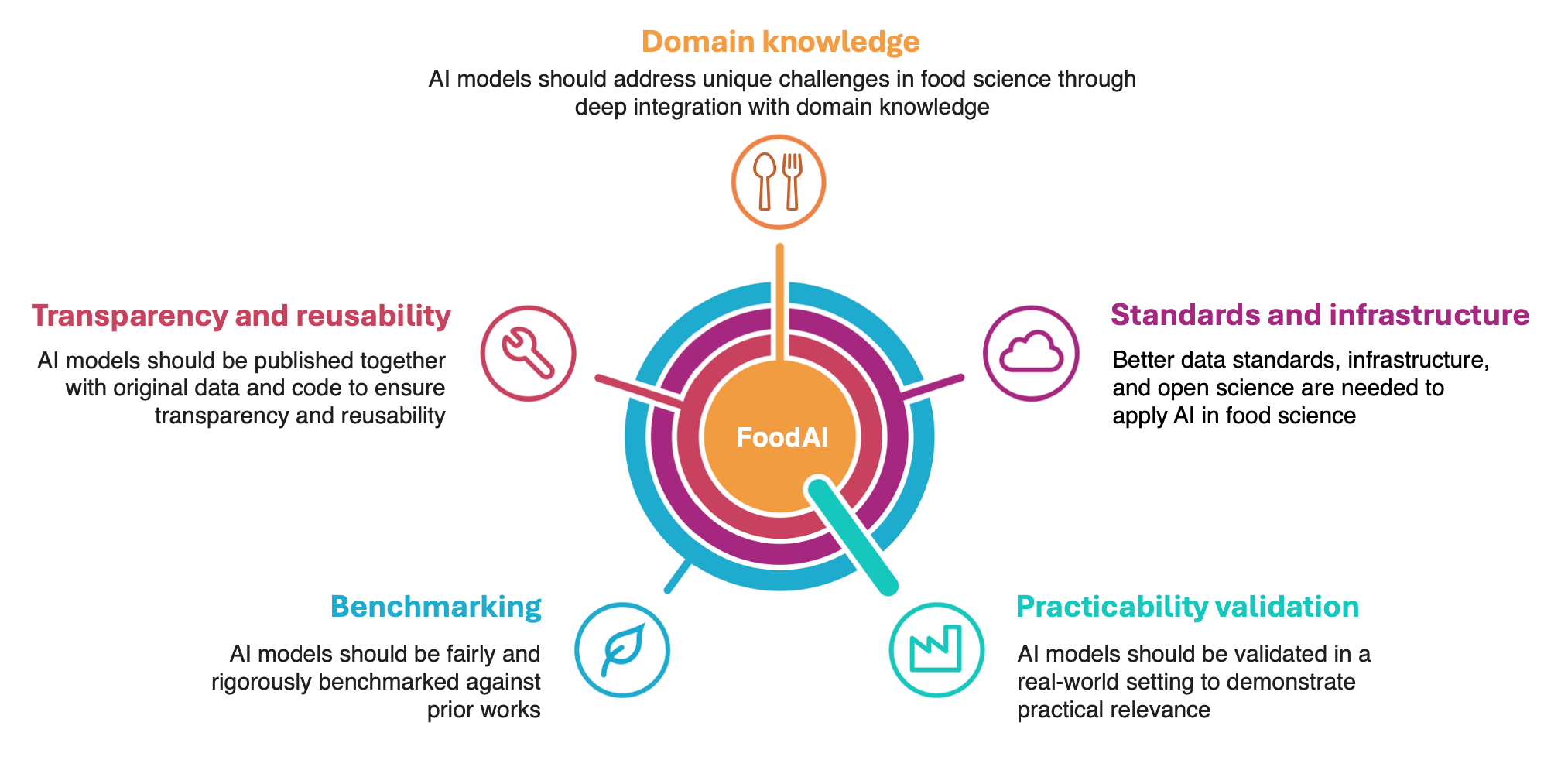
Five-point framework for trustworthy AI in food science
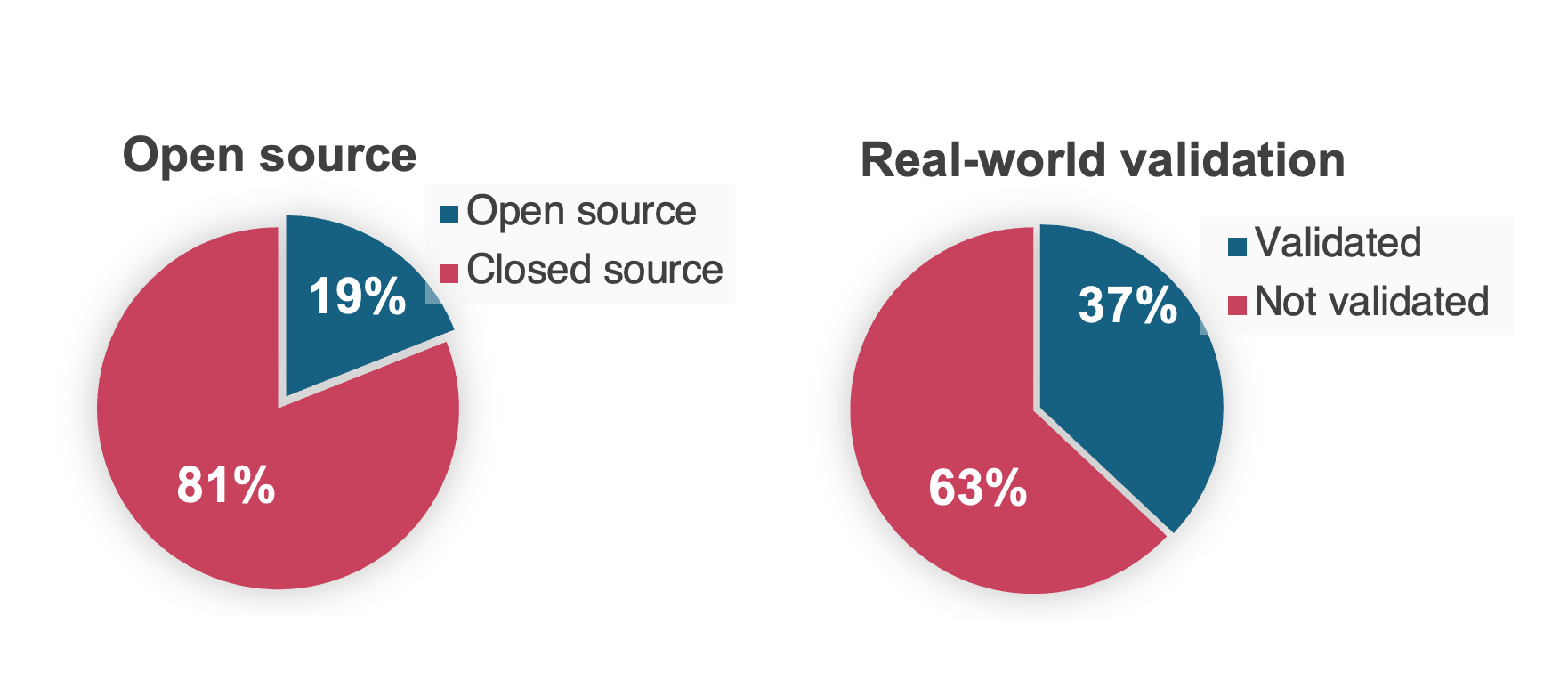
Most AI models in food science are closed-sourced and do not clearly report their real predictive performance or provide real-world validation
A new guide from NUS shows how food companies and researchers can move AI from black-box models to reliable tools for food safety and product design.
Researchers from the FoodAI Group at the National University of Singapore (NUS), together with international collaborators, say the key challenge is no longer whether AI can be used in food science, but how it can be used responsibly and reliably. In a series of recent studies, the team has released a field-specific practical guide to help researchers and food companies develop AI systems that are transparent, trustworthy, and grounded in real-world food science.
By reviewing the current landscape of AI research in food science, the researchers identified several weaknesses that limit trust and real-world adoption. For example, an analysis of published AI models for food flavor prediction found that the majority are closed-sourced and do not clearly report their real predictive performance or provide real-world validation. Similar issues were observed in widely used food chemical databases, where fewer than 20% are fully accessible and supported by rigorous quality control. These gaps make it difficult for both researchers and industry practitioners to judge whether AI predictions can be relied upon in practice.
To address these challenges, the team outlines a five-point framework for trustworthy AI in food science, emphasizing domain knowledge, transparency, fair benchmarking, real-world validation, and robust data standards.
Beyond these principles, the researchers have also released a practical guide tailored for food scientists and food industry professionals. The guide explains how to curate high-quality datasets, leverage tools such as large language model–assisted literature mining and high-throughput experimentation, and design food-specific AI models that are interpretable and aligned with physical and chemical principles. A checklist is included to help teams assess whether their AI-driven studies are robust, reproducible, and likely to deliver real impact.
“Our goal is to move AI in food science from proof-of-concept demonstrations to dependable tools,” says Dr. Dachuan Zhang, principal investigator of the FoodAI Group at NUS. “If AI is going to inform decisions about food safety, quality, and sustainability, it must be built on solid data, carefully validated, and guided by domain knowledge.”
Together, these efforts aim to help the food industry harness AI more effectively to ensure that when AI systems guide decisions about the foods of tomorrow, they are not only powerful, but also trustworthy.
Related publications
Zhang, D. Practical guide for food scientists to build AI: data, algorithms, and applications. Food Chemistry (2026).
Zhang, D. et al. Domain knowledge, just evaluation, and robust data standards are required to advance AI in food science. Trends in Food Science & Technology (2025).
Dachuan Zhang
National University of Singapore
+65 8027 9362
email us here
Visit us on social media:
LinkedIn
X
Legal Disclaimer:
EIN Presswire provides this news content "as is" without warranty of any kind. We do not accept any responsibility or liability for the accuracy, content, images, videos, licenses, completeness, legality, or reliability of the information contained in this article. If you have any complaints or copyright issues related to this article, kindly contact the author above.
